It takes a long time to grow an old friend
The Short and Tragic Life of Robert Peace“It takes a long time to grow an old friend” is the expression Raquel uses at Rob Peace’s funeral to measure the value of a relationship against the brevity of his life. Her words turn friendship into something cultivated over time: Rob’s influence was not a single generous act but a presence that deepened across years, leaving people with memories, habits, confidence, and grief after his death.
Meaning and Image
The expression presents friendship as organic growth rather than instant intimacy. Raquel immediately extends the image by comparing Rob to “a redwood tree looming large in my life.” The metaphor gives the relationship both duration and scale: an old friend takes years to become deeply rooted, while a redwood suggests a person whose presence eventually becomes larger than any one episode or memory. The phrase therefore describes not merely how long Raquel knew Rob, but how his character accumulated significance through repeated contact.
The image also carries an implicit contrast between cultivation and interruption. A tree grows toward its full height over time, but Rob’s life ended before that process could be completed. Raquel says that his life was “cut short before it could reach the full heights of its glory,” transforming the expression into a statement about unrealized continuation. The old friend had already become substantial in the lives around him, yet the person himself was denied the years through which that significance might have expanded further.
Use at Rob’s Funeral
Raquel speaks the expression during the public memorial for Rob, after describing him as a gentleman, a good friend, and a role model to her son Felix. She recalls that Rob taught Felix to shake hands like a man and that he had strengthened her own confidence at successive stages of her life: first as a student, then as a young woman, and finally as a mother. In this setting, “old friend” encompasses more than familiarity. It names a relationship in which Rob’s attention helped shape another person’s development.
The phrase follows Raquel’s direct acknowledgment of Jackie Peace, Rob’s mother: “He knows a good mama when he sees one.” That remark connects the language of friendship to the language of care. Rob’s ability to recognize and affirm a good mother becomes part of the same moral portrait as his role as teacher, gentleman, and friend. The expression thus sits within a funeral speech that gathers separate forms of attachment—family, mentorship, friendship, and community—around the memory of one person.
The Redwood Metaphor and Collective Grief
Raquel’s speech moves from an individual relationship to a collective image. She takes solace from the many people who “thrived and found refuge in his shade while he was with us.” The redwood metaphor makes Rob’s life a sheltering structure: his friends and students are not passive admirers but people whose own growth was enabled by proximity to him. The expression’s emphasis on time is therefore inseparable from its emphasis on consequence. Years of friendship produced a social world that continued to bear his imprint even after he was gone.
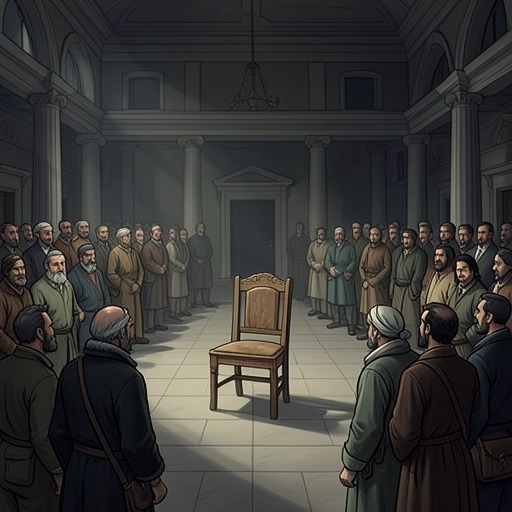
The funeral scene confirms how widely that imprint extended. Friends speak before the crowded church, and the later burial draws a smaller group to the plot where Rob is buried on top of Skeet Douglas’s coffin. Raquel’s words provide an emotional form for the difference between those two scenes: the public gathering shows the scale of Rob’s connections, while the old-friend image explains why those connections carry such weight. Grief is not presented as a reaction to a brief acquaintance but as the damage caused when a long-grown relationship is abruptly severed.
Narrative Significance
The expression gives the book a compact theory of remembrance. Rob’s life includes radical changes of setting and identity—from 181 Chapman Street and the family gathered around his newborn body, through his father’s imprisonment and the long visits to Essex County Jail, to his departure for Yale—but the phrase insists that durable human bonds are made through sustained presence. Even the account of Rob’s departure for Yale emphasizes the material and emotional labor surrounding a transition: he visits friends, visits his father, packs a television, clothes, books, and a side table, and leaves with Jackie after a ninety-mile drive. Such episodes make friendship and family into practices maintained across distance rather than sentimental abstractions.
The expression also stands against the violence that repeatedly interrupts the Peace family’s life. Skeet Douglas’s arrest for the murders of two young women leads to years of imprisonment, delayed trial, and separation from Rob; much later, Rob himself is found dead in the basement after the Smith Street home invasion. Against this chronology of arrest, confinement, and sudden death, the sentence “It takes a long time to grow an old friend” restores a slower human measure. It records what violence destroys: not only a body, but the future years in which a friendship might have continued to grow.